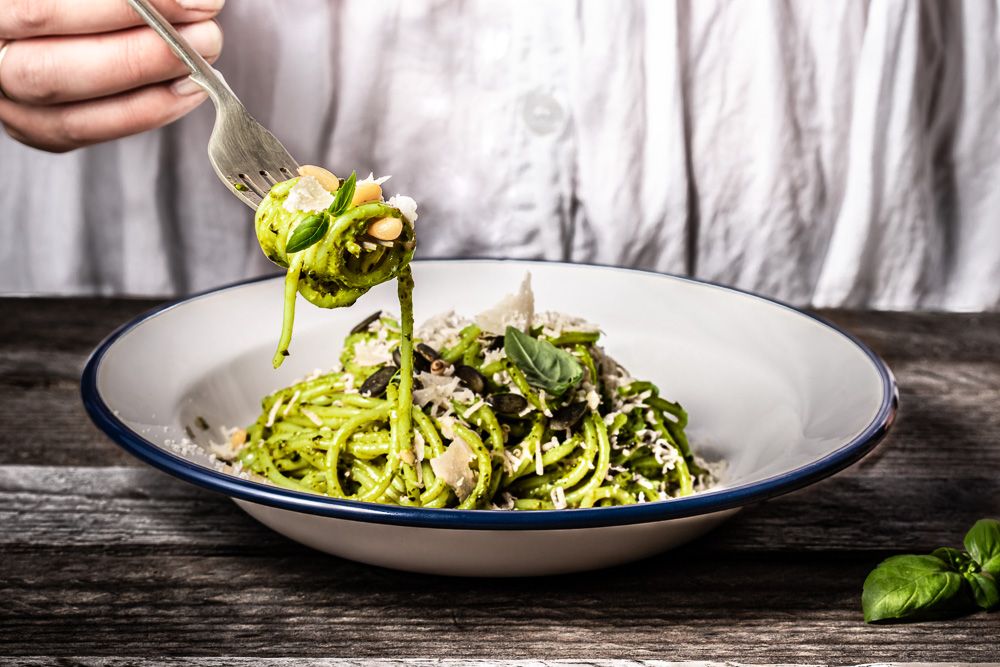
Pasta: it’s comforting, iconic, and oh-so-photogenic - unless it’s a pile of dry, sad noodles. The perfect pasta shot? It’s all about balance. You want texture, shine, and a hint of drama, but not too much sauce or chaos.
In this Pro Tips edition, 41 incredible creators (and me) share our favourite tricks for styling pasta. Whether you’re working with spaghetti, ravioli, or lasagna, these tips will help you get that just-right look—no soggy noodles in sight.
From creating texture with the right pasta shape to styling the perfect bite, we’ve got you covered with easy, effective tips to elevate your next pasta shoot.
Craving more industry secrets? Explore all Pro Tips episodes here.
What pro tip for styling pasta?
Before you scroll any further, grab your favourite hot drink or smoothie, find a comfy place, and get ready to dive into this inspiring read!
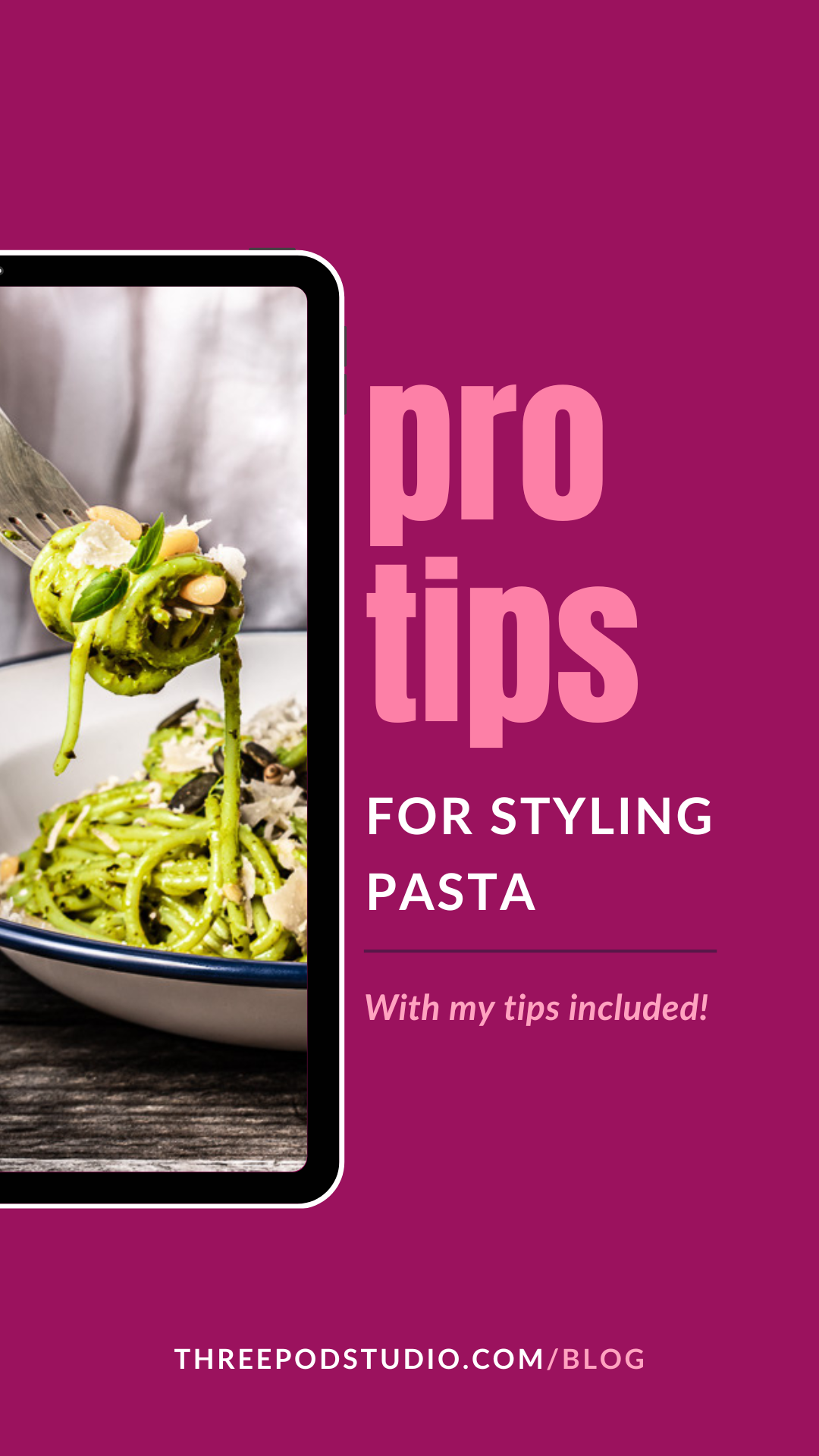
" Don't overcook the pasta to keep them a little bit firm. That way you can create a better looking styling for pasta. "
Maaike Zaal - cocktail-, food- & product photographer
" I hate styling pasta, especially long versions, like spaghetti and linguine. You either underwork it and end up with annoying bits in the photo, but when you start fixing it, it will very fast look like the picture was made by AI. So I guess my tip is to not overwork it. "
Meri-Tuuli Väntsi - food stylist, chef, content creator
" Pasta isn't going to look good for a long time, so I make sure everything else is perfect, then add in the plate at the last minute. The plate needs to be heated! "
Jella Bertell - food blogger
" Use chopsticks to shape it! And glycerin to make it look shiny. "
Natasha Maria Putrianti - food stylist
" For pasta served family style, I use a low, shallow bowl so the most amount of “food/product” can be shown. To place items like vegetables, herbs, I use both bamboo sticks and tweezers to place items onto the pasta and to "rearrange" and separate the pasta. To save on product/time, I use a facade on the bottom of the bowl, so I don’t have to use a lot of product and I keep the clients budget lower. I spray with oil so pasta does not stick, look dry in the shot. (I keep to showing “what is used in the dish” close to the hero shot, for example, basil sprig, laying close to shot or in the dish.)
Addition to the actual styling of food, I also “layer” the hero shot with tabletop styling. Using surface, then something like a “charger” or mat (with texture,) then the dish with a very light in weight, neutral napkin or towel. Everything in both texture and neutral so not to distract from the food and hero ~ but to make “lifestyle” and “inviting”. "
Bonnie Aunchman - commercial photo stylist
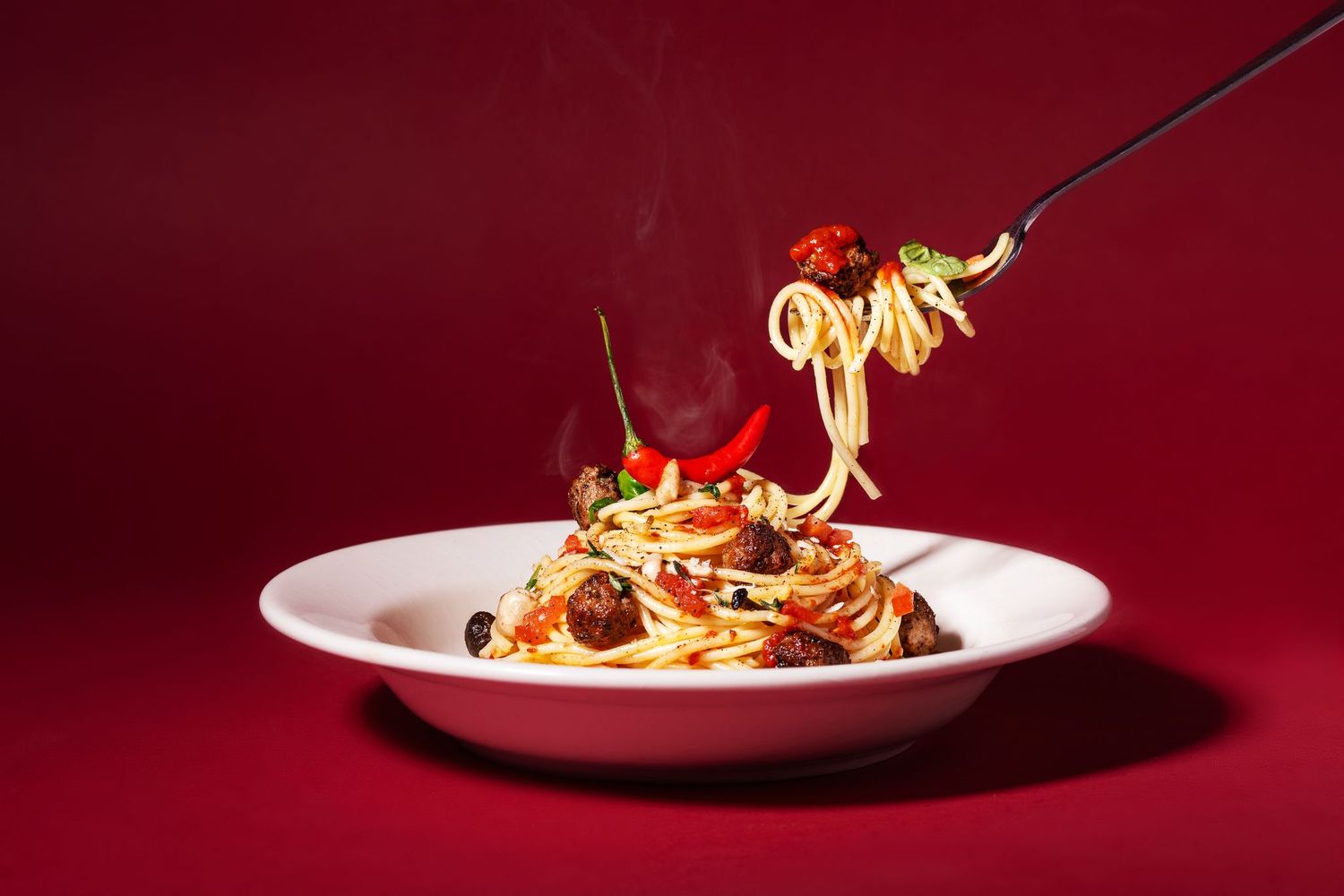
" Curl a few spaghetti around a fork, place, keep on until you got all the spaghetti in place "
Lenka Selinger - photographer & food stylist
" A stylist I work with - who is a noodle magician- always uses culinary tongs (like long tweezers) to form nests by twirling the pasta. "
Joanie Simon - photographer
" Don’t overcook the pasta as it’s lovely to see the shapes. Make sure the sauce (if you’re using sauce) is coating the pasta prettily. Brush with a little oil if it looks dull. Consider adding some of the ingredients used to make the sauce as props, to add to the story. Even though a bowl of pasta is delicious, unless it has garnishes it may risk looking a little flat. Garnish in ‘random’ clumps so it looks natural and maybe scatter a tiny bit of garnish on the backdrop too. "
Krissie Oldroyd - food blogger
" Lots of textures. I love brushing pasta with oil to add the shine to it, then adding texture with Parmesan, red chili flakes, chopped parsley, black pepper etc. "
Julia Konovalova - food photographer & food stylist
" Twirl
When styling pasta, use a fork or pasta twirling tool to create an elegant twirl of noodles. Lift a portion of the pasta and twist it into a neat mound on the plate. This not only showcases the pasta's texture but also adds height and movement to the presentation, making it look more inviting and dynamic. Garnish with fresh herbs, a sprinkle of cheese, or a drizzle of sauce to enhance the visual appeal even further. "
Nisha De Silva - food/beverage photographer & stylist
" My best tip for styling pasta is to not overcook the pasta (it will appear mushy) For props, you can really go all out and use cheese, cheese grater, veggies, herbs, a bottle or glass of wine. Pasta is so fun to style! "
Kristina Cadelina - food blogger & photographer
" For styling pasta, I like to think about the story I want to tell. Fresh ingredients and garnishes make great visual cues. When and how you add your sauce can also make a difference! "
Kirby Mekler - photographer & food stylist
" In this case, the Italian cuisine comes in handy with the tradition of cooking pasta al dente. So, leave the pasta slightly al dente, then let it cool immediately with cold water, and I always add a good olive oil. The oil keeps the pasta from sticking together and looking glued, and it also tastes good and just enhances the overall flavor of the dish. Bonus - the pasta looks shiny even when it's cold, and you can stylise it easily. "
Anna Ilieva-Alikaj - photographer
" Lots of oil so that it doesn't stick together. And ALWAYS hide the spaghetti endings. Tuck them in. "
Hadeel Magdy - food stylist & photographer
" I can say pasta is the easiest, if they have a good shape, their basic shape is already quite pretty. Your challenge is maybe just to improve your capability to create a unique and attractive arrangement. "
Fatula Waluyo - food stylist
" When it comes to pasta styling, there’s a key equation: planning and structure + speed. What do I mean?
- Start by preparing the pasta perfectly "al dente", without any other ingredients.
- Then, add your veggies or other components.
- After that, work quickly to add sauces, herbs, and final touches.
It’s all about layering and maintaining structure for that beautiful finish! And one more trick: always test the brand, because prep time, texture, and finishing can vary! "
Irina Lopik - photographer, prop stylist
" Always make a big batch of the sauce! The sauce tends to disappear when the pasta is cooling down or heated again. "
Aino-Kaisa Sihtola - food blogger, vegan cookbook author, chef
" If I'm going to shoot pasta at that very moment, I would try something funny. All the pasta is great to have an interesting approach. It will be messy, it might not stay on that very tipp of the fork, but it is a fun process. I have 2 tips on that: Cook it aldente (not completely ready), and Show its texture. "
Milena Ugrinova (Mim) - photographer
" For a pasta with red sauce, like bolognese, plate your pasta first and then go in and strategically spoon your sauce on to the plate. You still want to see the pasta underneath so you may find that you use less sauce than you would if you were actually eating the dish. Also, let the pasta cool before adding your sauce - the whole plate will last longer on set this way. "
Audrey Marie Bufalini - photographer
" Oh pasta, would recommend using some kind of tweezers for getting the perfect roll, but I just use chopsticks. Add some of those recognizable ingredients somewhere around the pasta in uneven numbers. Get things super delicious with some oily shine. "
Päivi Leino - photographer, blogger
" Undercook the pasta and don't cook it too soon. Cool it off with cold water and then spray it with cooking spray and stir that in to keep it from sticking together. "
Suzy Eaton - food stylist
" Toss noodles lightly in oil to prevent sticking and add a subtle shine. Add texture and contrast with fresh herbs, black pepper, grated cheese, or a drizzle of sauce. "
Noora Väänänen - content creator, food journalist, photographer & stylist
" Styling pasta can be so fun but don't forget about fresh herbs or freshly ground black pepper or chilli! Small details will make a huge change. "
Kristina Struharova - product photographer, videographer
" Use a little bowl upside down on the plate to arrange the pasta around. Or make a cone of a circular piece of cardboard to hold it up. Don't boil pasta for too long. And make sure there is a glossiness of olive oil over it. "
Anoeska Vermeij - food photographer
© Anoeska Vermeij
" If possible, position noodles with your hands, yes! Take your time to create a cool swirl and cool shapes, sometimes using your hands is the best technique "
Karen Loza - food photographer & stylist
" Don’t overcook your noodles and don’t let them dry out! "
Austin Claire Hackworth - photographer
" I always use al dente pasta so the pasta does not break easily and it can also be shaped better. I usually mix the pasta with a little bit of the sauce, plate it in a natural way then add additional sauce on it later.
- If it's a spaghetti or fettuccini I shape them using large tweezers and place them onto the plate.
- If it's penne or rigatoni I place them onto the plate first then move them around to create a natural looking dish.
I will then continue adding the additional ingredients and sauce as per the recipe. I add shredded cheese and garnish such as parsley or basil last.
The pasta styling process however should be done relatively quickly as the pasta tends to dry out quickly. If that happens we can freshen the dish up using an Evian spray can or a steamer to create some shine. "
Henriett Braun - food stylist
" Pasta needs to look fresh, so you need to act fast. Have your scene and camera set up ahead of time. Save a cup of salted water from cooking the pasta and brush it over the pasta when it begins to dry up. You can use a pastry brush or paintbrush. "
Emily Miller - photographer, recipe developer, blogger
" Only cook the pasta for a couple of minutes. This will make it easier to style while keeping its shape and ensuring it looks fresh and appetizing in the picture. "
Kata Endrődi - photographer
" Styling pasta is all about bringing out its texture and shine while keeping it looking fresh and appetizing. When working with pasta, I’ve always partnered with talented stylists or chefs who bring their expertise to the table. Styling pasta is as much about preparation as it is about presentation. With a little care and attention, you can make even the simplest noodles or dumplings look camera-ready and utterly delicious.
Here are a few helpful techniques I’ve learned over time:
- Tackle the challenge of clumping and drying out: one of the biggest hurdles with pasta is preventing it from clumping together or looking dry. To address this, lightly toss the pasta with oil. This not only keeps the strands separate but also gives them a subtle shine that looks fantastic on camera.
- Highlight texture with intentional arrangement: pasta has beautiful natural textures that can be showcased with a little effort. Use long tongs to carefully shape and arrange the strands. This helps create a neat yet organic look that draws attention to the pasta’s details.
- Keep sauce in check: when it comes to sauces, less is more. Use small tools, like spoons or brushes, to apply the sauce sparingly. The goal is to enhance the pasta’s appearance without overwhelming it or masking its texture. "
Joanna Wojewoda - photographer
" Pasta tends to dry over a period of time - often, you will see a layer of dry sauce which has completely darkened in colour. Pasta also tends to become thicker as it cools down. To take care of this problem I often ask the chefs to make the sauce more thinner than usual and not heat it too much. Once the sauce cools down a bit one can give it a stir to remove any cooled down layer and then start plating. "
Abhishek Khanna - food photographer & stylist
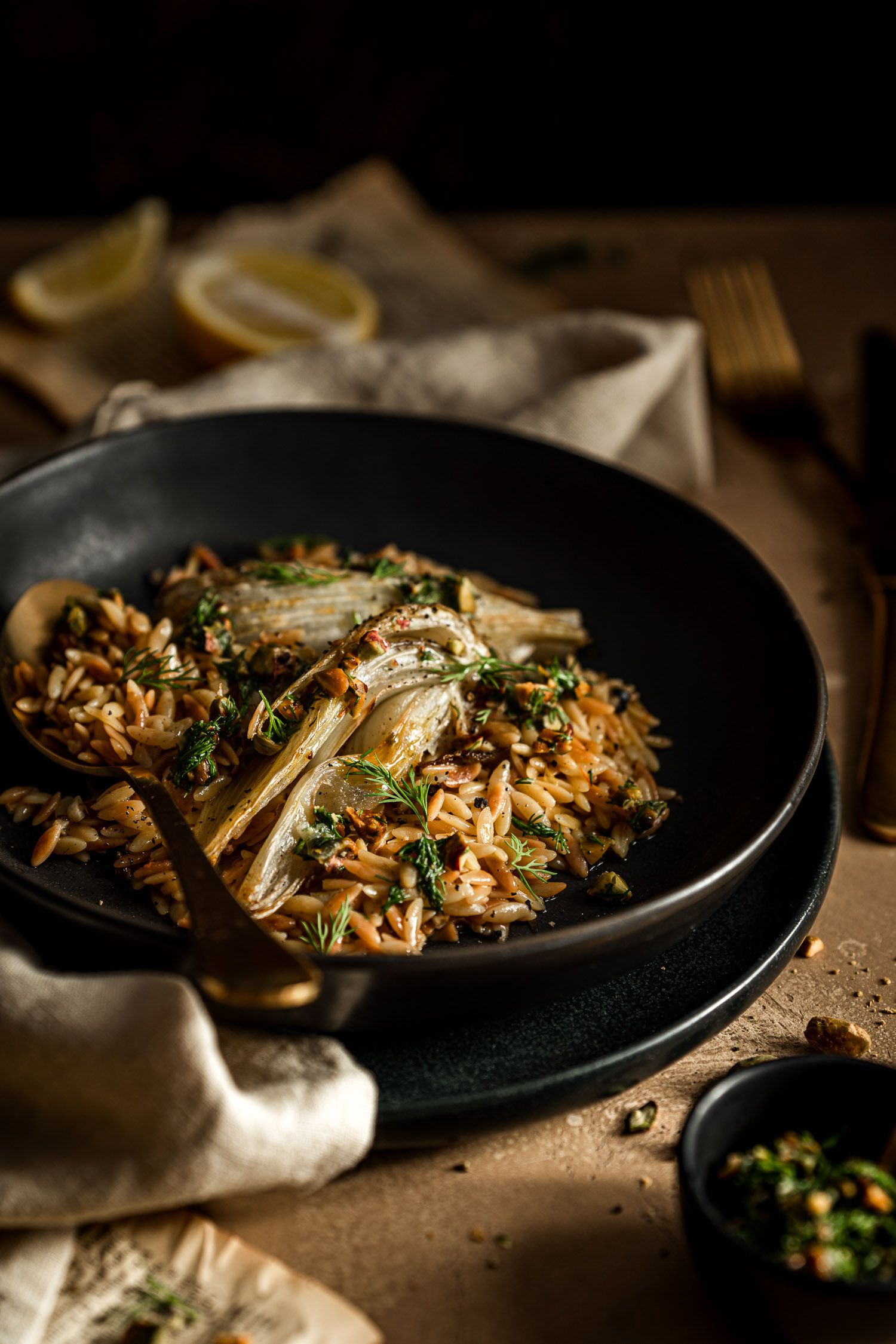
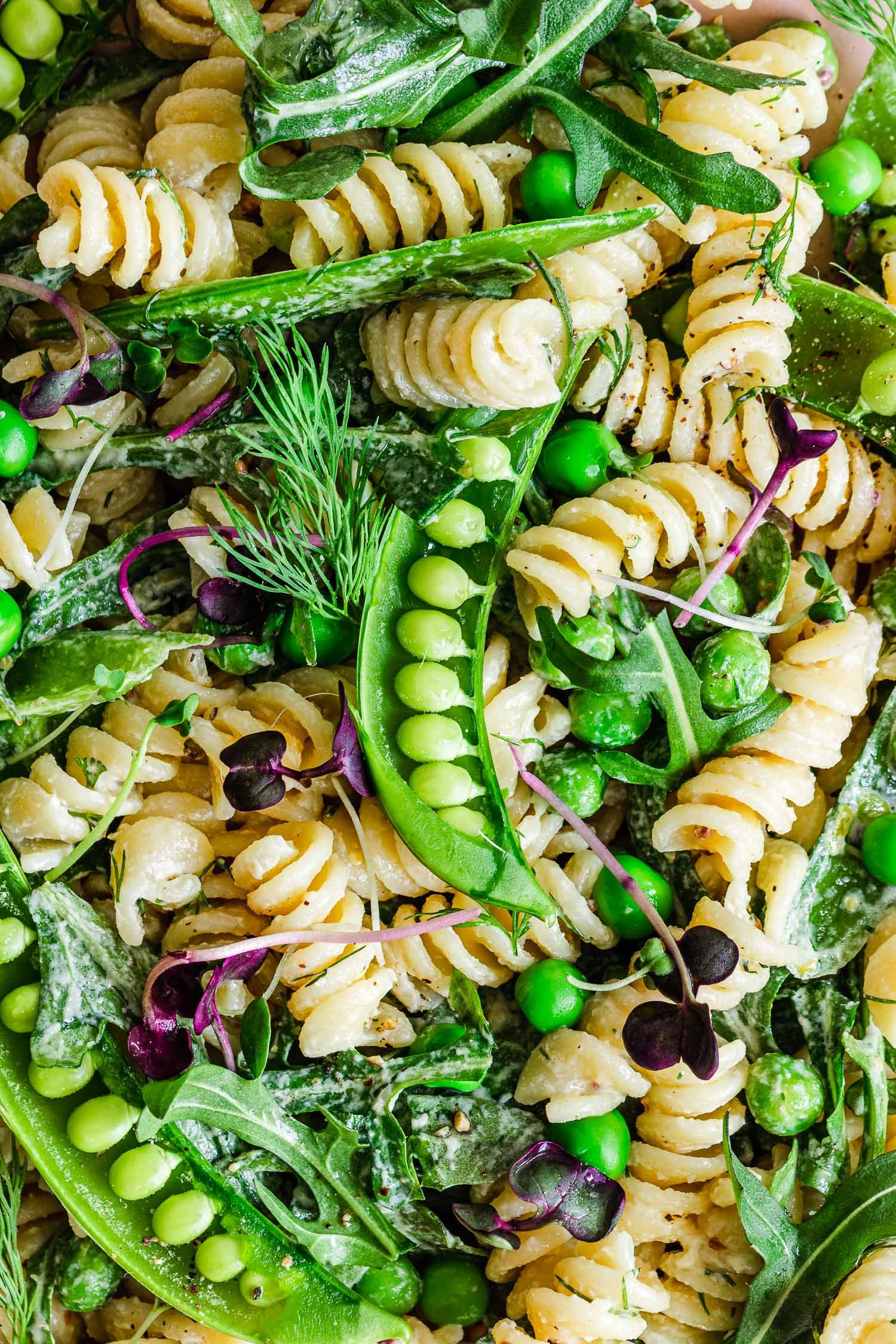
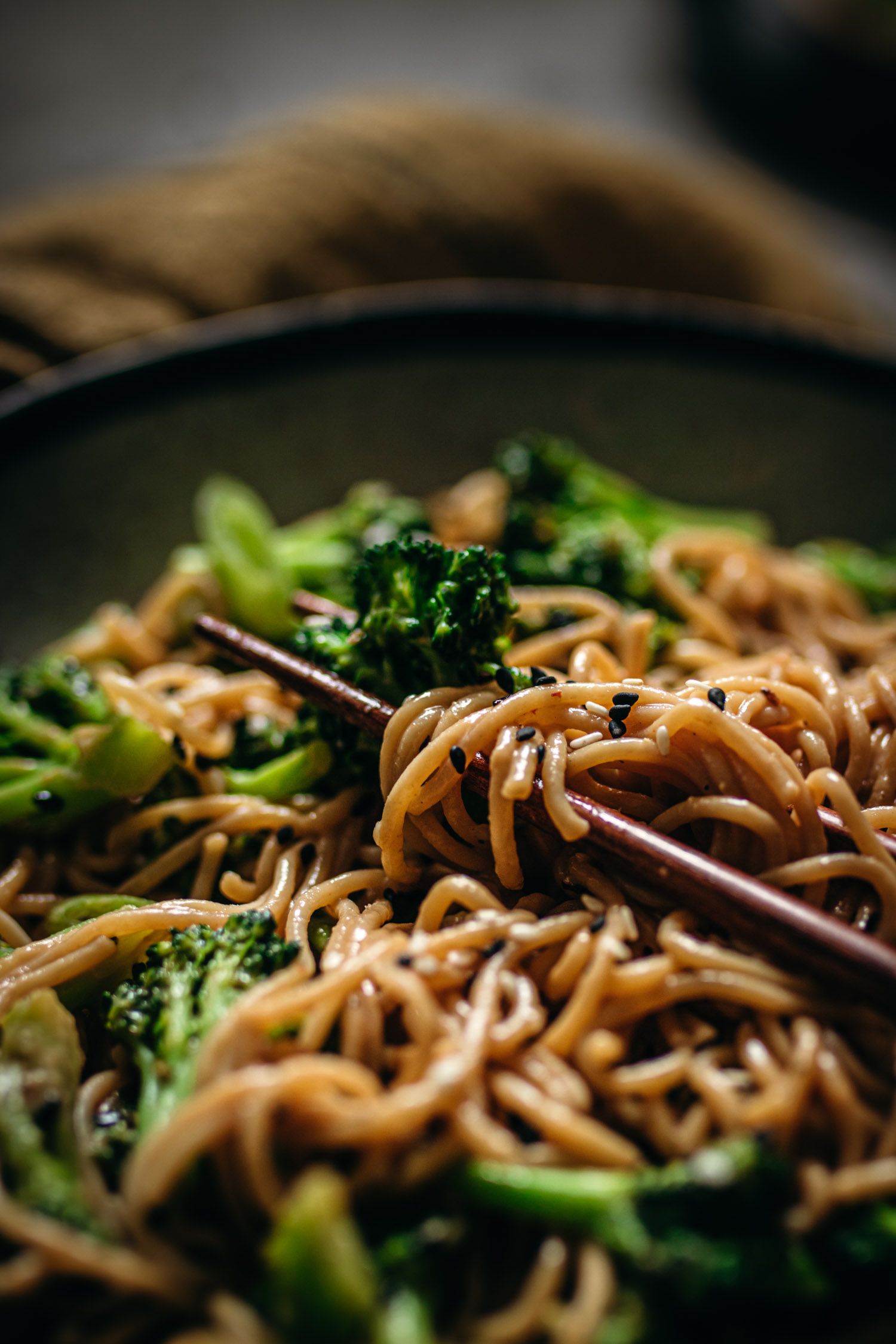
" Brushing oil on pasta is one of the best ways to make it look extra decadent, in my opinion. If the pasta needs to be tossed in a sauce, I try to make sure that the sauce is not too hot as that would result in the pasta cooking longer, its shape being affected, and the dish losing its appetizing look over time as I shoot. The same thing applies to ramen, I try to keep the broth at least room temperature if not colder to prevent the pasta and other veggies from cooking further while I shoot."
Murielle Banackissa - food photographer, food stylist, blogger, cookbook author
© Murielle Banackissa
© Murielle Banackissa
© Murielle Banackissa
" This type of product may seem easy to work with but has its challenges, such as ensuring the sauce doesn’t ruin the shape of the pasta. There needs to be just enough sauce to make it look appetising without overly covering the type of pasta chosen. It’s advisable to start with a small amount of sauce and add gradually until the desired effect is achieved. "
Oscar Sanz - food stylist
" Undercook and under-sauce pasta. Save some whole cooked ingredients to add overtop or in between layers of pasta. Fresh herbs and cheese are added last because they quickly wilt and melt and a little cooking spray gives noodles a bit of an appetizing shine. Also, think about the pasta shape when selecting the right plate to showcase the dish in. "
Anisa - photographer, recipe developer
" Use your fingers to wrap long pasta into attractive spirals. "
Jane Coupland - photographer, content creator, blogger
" Shoot quickly, or undercook and add oil.
Pasta when cooked properly, sticks together very easily, so when shooting these dishes in restaurants I find it's in my best interest to shoot it quickly, and request the dishes to be remade frequently if required. When creating my own pasta, I like to undercook the pasta by about a minute, and add a bit of oil to the mixture as it stays in a decent form for longer. "
Kera Wong - creative
" Tongs and pincers have been my best friends for styling these. "
Shwetha Elaina - food photographer & stylist
" I also undercook the pasta so they can keep their good shape. The texture of the sauce is also very important but I don't want the pasta to be drowning and not be recognizable. I always add more layers with salt/pepper, herbs and cheese. "
Constance Ibañez - food photographer, culinary event host
" Highlight the color and shine.
Pasta showcases different textures and light reflections, especially depending on whether it has sauce or not. For example, when using olive oil on pasta, make sure the light beautifully reflects off the sauce, making the dish even more appetizing. When photographing, it's important not just to capture the color of the pasta but also its details. If you're photographing fresh pasta or gnocchi, light them from the side or slightly from below to accentuate the wrinkled, surface textures. The small shadows and highlights will help the pasta's texture stand out.
If you're photographing spaghetti, fettuccine, or any long pasta, a little extra technique is needed to make the pasta "twist" nicely on a fork or in a small bowl. You can first wind the pasta around a fork and then arrange it in a small circular shape on the plate. This adds dynamic to the composition and emphasizes the pasta's long form. The twists should be arranged a bit loosely, in an airy fashion, so they don’t look too tightly packed together. "
Liliána Tóth - food photographer
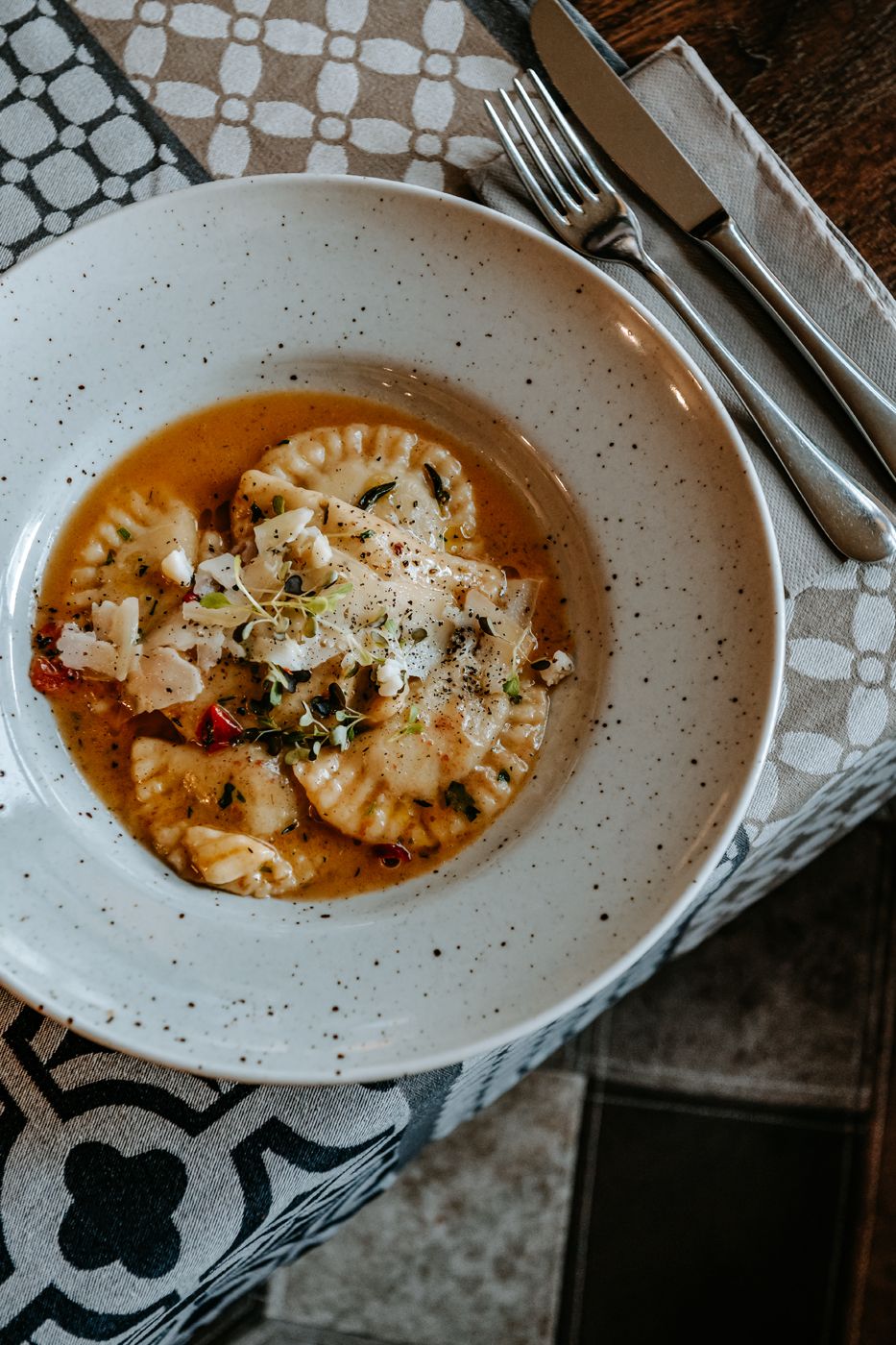
© Liliána Tóth
" Undercook the pasta slightly, then drizzle olive oil over before add the condiments. This will help maintain the pasta's shape and prevent it from becoming sticky (especially if you want to show a plain pasta with the sauce on the top). "
Marika Cucuzza - food photographer, recipe developer, content creator
" When the job requires the noodles to be slurped from the bowl or hang from a fork/chopsticks, I individually go through the cooked noodles and select the longest pieces to use for my styling work - this avoids me the frustration of dealing with broken pieces, difficult-to-hide ends, and a misbehaving, uneven bunch. "
Reka Peurala - photographer, stylist, recipe developer, mentor